
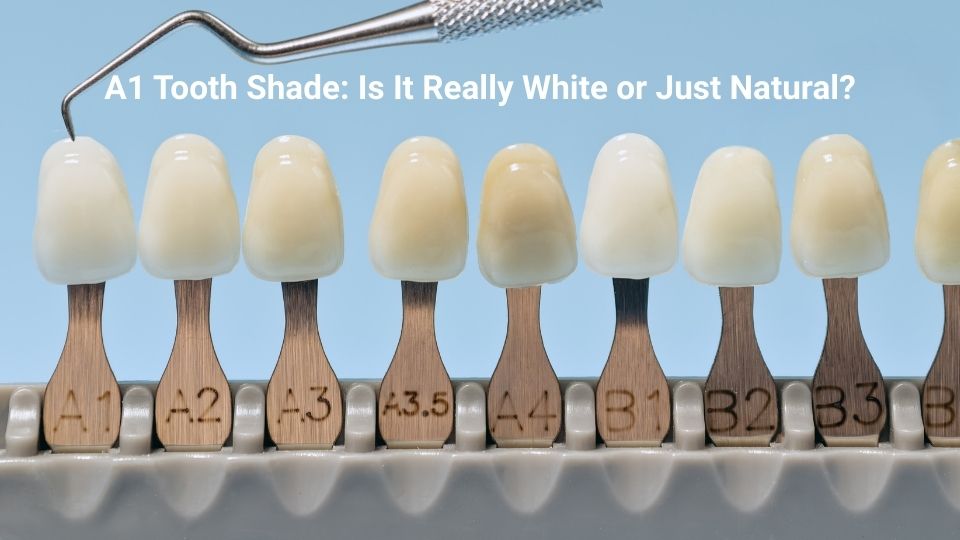
One of the most common questions patients ask when it comes to tooth colour is:
'Is A1 tooth shade really white, or does it just look natural?'
A1 tooth shade is included in the VITA Classical Shade Guide, one of the most widely used colour classification systems in dentistry, and is considered 'natural white' in aesthetic dental treatments. In this article, we will explain what A1 tooth shade means, how it differs from B1, in which treatments it is preferred and how it is scientifically evaluated.
What is A1 tooth shade?
A1 tooth shade is the lightest shade of the A group in the VITA Classical colour scale.
In the VITA system, tooth colours are divided into four main groups: A, B, C and D:
Group A: Reddish-brown undertones
Group B: Reddish-yellow undertones
Group C: Shades of grey
Group D: Reddish-grey tones
A1 is considered one of the lightest and most balanced natural white shades among these groups. For this reason, it is frequently preferred by both dentists and dental technicians.
Is A1 tooth colour white or natural?
From a clinical point of view, A1 is defined as a healthy and natural white tooth colour, not 'too white'.
This point is especially important because the aim of aesthetic dentistry is not always to achieve the whitest shade, but to achieve a colour that is compatible with the face and mouth structure.
Perception of tooth colour according to scientific studies;
- Light conditions
- Skin tone
- Lip colour
- Restoration in the neighbourhood
is influenced by many factors. For this reason, A1 is perceived by many as the 'ideal white' in everyday life.
How to determine A1 tooth shade?
Visual (classic) method
In the traditional method, the dentist assesses the tooth colour visually with the help of a shade guide. This method is fast but may vary depending on light and personal perception.
Digital measurement methods
Today, digital systems are preferred for more objective results:
- Spectrophotometers
- Intraoral scanners
- Digital photo analysis systems
The scientific literature shows that spectrophotometers in particular give more consistent results by measuring tooth colour over the CIELAB colour space.
In which treatments is A1 tooth shade preferred?
Teeth whitening
In many patients, the targeted result after professional whitening is A1 level. However, factors such as initial colour, enamel structure and age affect the result.
Lamina and veneer treatments
A1 is one of the most preferred shades for porcelain laminae and veneers.
The reason is the low risk of an 'artificial' appearance over time.
Crowns and veneers
Due to its compatibility with natural teeth and stable results in laboratory production, A1 is considered a safe choice for fixed prostheses.
What is the difference between A1 and B1?
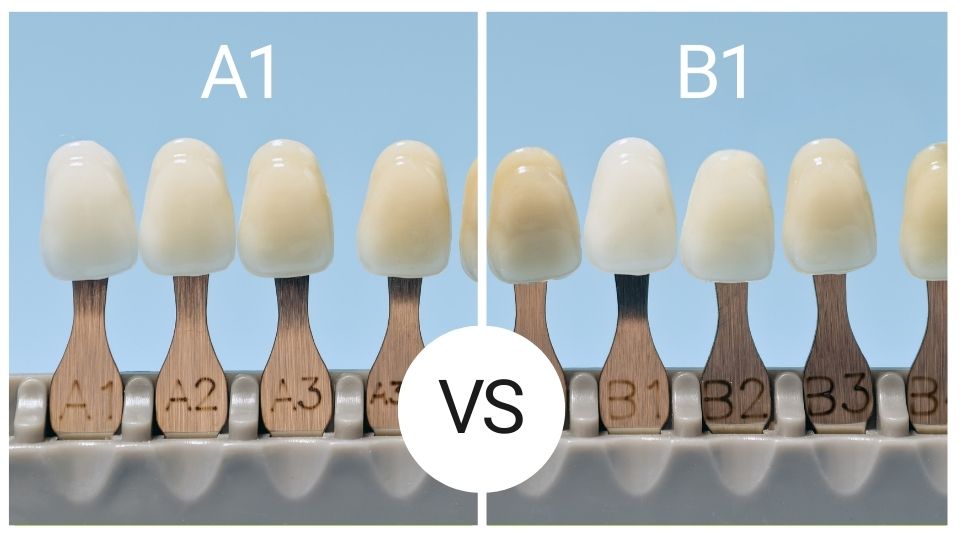
| Feature | A1 Tooth Shade | B1 Tooth Shade |
|---|---|---|
| Whiteness Level | Natural white | Brighter white |
| Undertone | Slightly warm | Cooler |
| Perceived Naturalness | Very high | More noticeable |
| Clinical Use | Most common | Aesthetics-focused |
| Long-term Appearance | Balanced | May look artificial over time |
Is A1 tooth shade suitable for everyone?
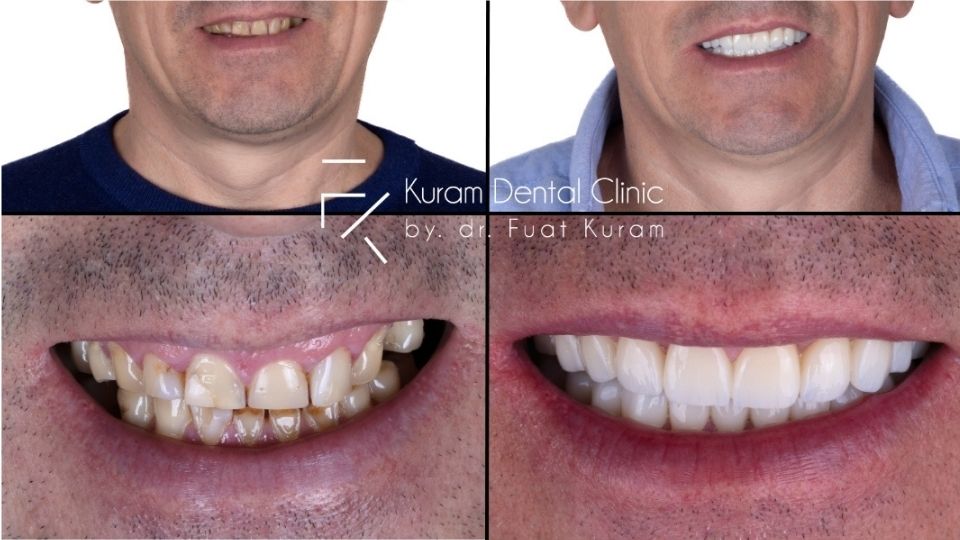
Although A1 tooth shade is suitable for most patients, it may not be ideal for everyone.
In particular:
- B1 may be more aesthetic in very fair-skinned individuals
- In the more mature age group A1 looks more natural
- Patients with social media orientated 'very white' expectations may find A1 insufficient
Therefore, colour selection must be made with clinical evaluation.
Is A1 tooth shade permanent?
After bleaching: The colour may return slightly over time
Crowns / veneer: A1 colour stable for many years
Coffee, tea, smoking: may adversely affect colour stability
Scientific studies show that shade A1 shows high colour stability in restorative materials.
Frequently Asked Questions About A1 Tooth Shade
Is A1 whiter or B1?
B1 is whiter, A1 is more natural.
Is A1 the whitest tooth colour?
No. There are lighter shades in the VITA system, but they are not considered natural.
Can A1 be achieved with bleaching?
Yes in most patients, but it is not guaranteed.
Who prefers A1 tooth shade?
Preferred by those who want a brighter but still natural-looking whiteness. People who generally have front teeth aesthetics done, want to significantly improve their smile but avoid an “overly white” appearance choose A1. It is frequently preferred by those aged 20–40.
A1 vs B1 tooth shades
The difference between A1 and B1 tooth shades is primarily related to brightness and undertone. A1 is a whiteness closer to natural tooth color, with slightly warm (yellowish-beige) undertones, and does not look “too artificial” in most mouth structures. B1, on the other hand, is considered brighter and whiter on the tooth shade scale; its undertone is more neutral and provides a more striking appearance, closer to a “Hollywood smile,” after cosmetic procedures. In short, A1 provides a more natural and soft whiteness, while B1 provides a more bold and pronounced whiteness.
Who prefers B1 tooth shade?
It is preferred by people who want an aesthetically pleasing, eye-catching smile because it is one of the whitest and brightest shades. The Hollywood Smile is more common in professions focused on social media visibility, being on camera, or stage/screen work. It stands out as noticeably whiter than natural teeth.
A1 vs A2 tooth shade
The difference between A1 and A2 tooth color is understood in terms of whiteness level and warmth. A1 is one of the lightest shades in the A group and offers a brighter, cleaner whiteness. A2 is one shade darker than A1; it has slightly more warmth and provides a softer appearance that is very close to natural tooth color. In short, A1 offers a brighter, more aesthetically noticeable whiteness, while A2 provides a more natural and balanced tone for those who want their teeth to look like their own.
Who prefers A2 tooth shade?
A2 tooth shade is the classic choice for those who want their teeth to look natural. People who prioritize naturalness and seek harmony with surrounding teeth after veneers or implants choose A2. It is quite common in the middle age group and for front-back tooth harmony.
A1 vs A3 tooth shades
The difference between A1 and A3 tooth shades is evident in their level of whiteness and warmth intensity. A1 is a lighter and brighter shade, providing a cleaner and more youthful appearance after cosmetic procedures. A3, on the other hand, is a noticeably darker shade with stronger yellow-beige undertones, closer to the natural, untreated tooth color. In short, A1 provides a brighter, more aesthetically focused tooth color, while A3 provides a warmer, more natural, and less attention-grabbing tooth color.
Who prefers A3 tooth shade?
It is preferred by those who want a warmer and more mature tooth color. Generally, people in the older age group who do not want very white teeth or who aim for maximum harmony with their existing tooth color choose A3. It is one of the most natural-looking shades and the color that gives the least sense of aesthetic intervention.
References
-
ISO 22598:2020 – Dentistry — Colour tabs for intraoral tooth colour determination.
https://www.iso.org/standard/73544.html -
Joiner A. Tooth colour: a review of the literature. Journal of Dentistry, 2004.
https://pubmed.ncbi.nlm.nih.gov/14738829/