
What exactly is this 'B1 tooth shade' we hear so much about? Why do dentists use this term so frequently? In this article, we will examine the B1 shade, considered the pinnacle of natural tooth color, the tooth shade scale, and everything you need to know when you want to enhance your smile, based on scientific data.
What is a 'scale'?
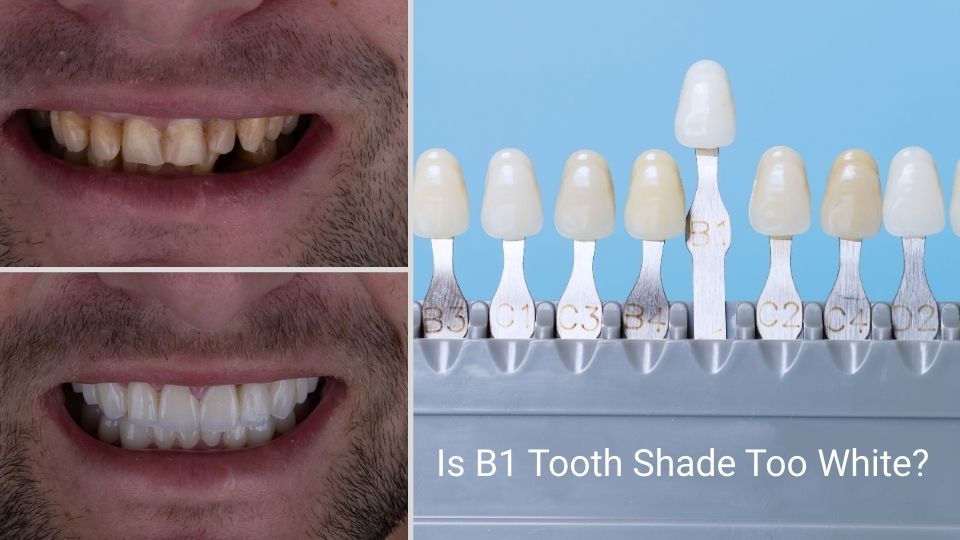
Colors are not defined randomly in dentistry. Just like the color catalogue you use when painting a house, dentists also use a standardized color guide. The most commonly used system is the VITA classical A1-D4 scale. This scale is accepted as the standard by dentists and dental technicians worldwide.
During your examination, your dentist will take this color key and compare your teeth to it to tell you which group you belong to. This is done both to match the color of restorations such as fillings to your natural teeth and to determine the starting and ending points of teeth whitening treatments.
What do the letters and numbers on the scale mean?
- Letter (A, B, C, D): Indicates the primary color group, i.e., the 'hue' of the color.
- Number (1, 2, 3, 4): Indicates the degree of lightness or darkness within the same color group, i.e., the 'chroma' of the color. Here, 1 is the lightest and 4 is the darkest shade.
Meaning of colour groups
Each primary color group represents a different undertone found in the natural structure of teeth. These undertones originate from the natural color of the dentine layer beneath the tooth enamel. The meanings of the colour groups are as follows:
Group A (Reddish-Brownish):
This is the most common natural tooth color group. Frequently seen in Central European and Mediterranean populations, this shade has a slightly warm undertone. A1 is the lightest shade, while A4 is the darkest.
B Group (Reddish-Yellowish):
The B1 tooth shade is the lightest member of this group. As the name suggests, this group contains slightly yellow undertones. However, this yellowness is not a negative trait but a healthy part of the natural tooth structure.
C Group (Grey):
Teeth in this group have cooler, grey undertones. This tone may occur naturally, or it may be caused by the use of certain medications (particularly tetracycline).
D Group (Reddish-Grey):
This group contains a mixture of grey and reddish tones and is relatively less common.
B1 Tooth Colour: The Peak of Naturalness
What makes the B1 tooth color so special?
On the VITA scale, B1 is considered the lightest, whitest color that natural teeth can achieve. This is the brightest tooth shade you can have entirely naturally, without any external intervention. In a sense, it is the 'luxury version' of a natural smile. For many people, this natural whiteness standard is the desired goal in cosmetic dentistry.
Scientific data also supports this specific position of B1. In a study published by the National Institutes of Health (NIH), the colors on the VITA scale have been tabulated according to international color standards (CIELAB). According to this table:
| VITA Colour | Lightness (L) | Red-Green Value (a) | Yellow-Blue Value (b) |
|---|---|---|---|
| B1 | 59.85 | 4.24 | 7.34 |
| A1 | 63.46 | 5.05 | 9.11 |
| B2 | 61.90 | 6.09 | 12.55 |
- Yellow-Blue Value (b): B1's value (7.34) is lower than A1 (9.11) and B2 (12.55). This proves that B1 contains less yellow pigment, meaning it appears whiter.
- Lightness (L): A1 (63.46) actually has a higher lightness value than B1 (59.85). This means that A1 may appear slightly brighter in terms of light reflection. However, the eye perceives color not only by lightness but also by hue. A1's reddish-brownish hue distinguishes it from B1's 'pure' white.
It is this subtle difference that makes B1 such a sought-after shade. In a dentist's view, if a patient's natural tooth color is B1, this usually means that whitening treatment is unnecessary. In fact, when these individuals request whiter teeth, their dentist may caution them, saying, 'Your teeth are already at the limit of natural whiteness; any more could look unnatural.'
B1 or A1?
Although B1 is the whitest of natural teeth, it is possible to go beyond this natural limit with whitening procedures or porcelain laminate veneers (porcelain laminates). On this artificial whiteness scale, there are much whiter shades, indicated by codes such as 0M1, 0M2, and 0M3, which are even whiter than B1.
So what is the difference between B1 and A1? Although both are very light shades, A1 has a reddish-brown (A group) undertone, while B1 has a reddish-yellow (B group) undertone. For most people, it is quite difficult to distinguish this difference with the naked eye. A1 can be described as a slightly warmer white, while B1 is a slightly cooler, porcelain-like white. Although it is commonly believed that B1 is whiter than A1, these two shades are actually neighbors on the spectrum of naturalness and depend on personal preference. The important thing is that the chosen color harmonizes with your skin tone, eye color, and overall facial features.
Causes of tooth discolouration
Most of us do not have B1-colored teeth, and this is completely normal. Just like our hair color or skin tone, our tooth color is genetically determined and varies from person to person. Most people's natural tooth color falls between B4 and A3. However, over time and due to various factors, our teeth can become darker. Tooth discoloration is generally of three types:
Extrinsic (external) discolouration
This type of discoloration consists of stains on the outer surface of the tooth, on the enamel layer. It is usually directly related to our lifestyle habits and can be largely removed with professional teeth cleaning.
- Coloring foods and beverages: Dark-colored foods such as coffee, tea, red wine, cola, soy sauce, and curry cause stains on tooth enamel.
- Tobacco use: The nicotine and tar in cigarettes and cigars cause stubborn yellow and brown stains on teeth.
- Poor oral hygiene: When regular brushing and flossing are neglected, plaque that builds up on teeth and tartar that hardens over time can cause teeth to appear yellow and even blackish.
Intrinsic discolouration
This discoloration occurs within the internal structure of the tooth, in the dentine layer, and cannot be removed by surface cleaning. It usually occurs during development or as a result of dental trauma.
- Medication use: Tetracycline antibiotics, especially when used during childhood (under 8 years of age) or in utero, can cause permanent grey or brown banding on the teeth.
- Excessive fluoride use (fluorosis): Excessive fluoride intake during childhood can cause a range of appearances on the tooth enamel, from white spots to brown spots.
- Dental trauma: A blow to a tooth can disrupt its internal blood supply, causing it to turn grey or pinkish-brown over time.
- Root canal treatment: A tooth that has undergone root canal treatment may darken over time as it loses its vitality.
Ageing
This is perhaps the most inevitable cause. As we age, our teeth naturally darken in color. There are two main reasons for this:
- Wear and thinning of the tooth enamel over the years.
- The underlying dentine layer, which is naturally more yellow, becomes more visible as the enamel thins.
Whitening options to achieve B1:
If you are unhappy with the color of your teeth and aim to achieve a whiter shade like B1, there are many safe and effective options available today. However, the most important point to remember is that you must consult a dentist before starting any whitening procedure. Your dentist will check whether you have any active problems such as gum disease or decay and determine the most appropriate treatment for you.
In-office teeth whitening (At the clinic)
In this method, the teeth whitening procedure is performed by a dentist in a clinical setting. After the gums are covered with a protective barrier, a high-concentration whitening gel is applied to the teeth and is usually activated with a special light source. The procedure takes approximately 60-90 minutes and can achieve up to 6-7 shades of whitening in a single session. Its biggest advantage is that it is fast and effective. However, temporary sensitivity in the teeth is possible during the procedure, which usually subsides within 24 hours.
Home whitening (under dental supervision)
Your dentist will make a custom transparent tray and a lower-concentration whitening gel for you to use at home. They will also take impressions of your teeth. You can whiten your teeth at home by wearing the tray for the amount of time your dentist suggests, which is usually a few hours a day or overnight for a few weeks. This procedure takes longer to work, but the outcomes are more predictable than in-office whitening. Keep in mind that over-the-counter products offered in grocery stores that aren't checked by a dentist can irritate the gums and harm the enamel on your teeth.
The effects of the whitening process usually last between 8 and 12 months, depending on the person's eating and oral hygiene habits. To make this time longer and keep the whiteness, your doctor may suggest that you use your home whitening kit every few months (for example, every three months for a few days).
Things to keep in mind after whitening
You have a lot of control over how long the results of teeth whitening last. The first 48 to 72 hours after the operation are very important. At this point, the pores in the tooth enamel haven't closed yet; thus, they are particularly sensitive to re-staining.
- Things to Stay Away From: Foods and drinks that are dark in color, like coffee, tea, red wine, cola, tomato sauce, soy sauce, and curry. Cigarettes and other tobacco items. Foods that are acidic, like vinegar and citrus fruits, may make you more sensitive.
- What to do: If you can, drink colored liquids through a straw. Brush your teeth twice a day and use dental floss to keep your mouth clean. Your dentist may suggest toothpastes that may reduce sensitivity.
5 tips for achieving B1 tooth colour
1. Get your teeth checked every six months.
The best technique to get rid of stains on the outside of your teeth is to get them scaled. Your dentist can also find any cavities or gum problems early on, before they get worse and cause additional discoloration.
2. Brushing and flossing correctly.
This is the most important thing you can do to keep plaque from building up and get rid of surface stains. Whitening toothpastes can help with surface stains because they have mild abrasives, but they don't change the color of the teeth.
3. Be careful when you eat coloring agents.
Drinking water between sips or using a straw when you drink coffee or tea will help keep your teeth from staining. It is also good to rinse your mouth with water after eating.
4. Don't smoke or use tobacco products.
This is one of the best things you can do for your teeth and your health in general.
5. Get professional help for whitening.
Whitening products you buy online or at the store can hurt your gums and wear down your tooth enamel for good. Always talk to your dentist about a treatment plan that works for you.
F.A.Q.
Is B1 a natural color for teeth?
Yes, B1 is a natural color for teeth. This is the lightest color that healthy teeth that haven't been treated can get. This is why dentists choose B1 as a guide for the most natural whiteness.
Is B1 the whitest color for teeth?
Yes, there are. This is what some term "bleached shades." You can't get shades like 0M1, 0M2, and 0M3 naturally in your teeth; you can only get them through whitening treatments or porcelain veneers. Some people call these colors "Hollywood white."
How long does it take to get shade B1 with teeth whitening?
This changes based on the color you started with and the approach you employed. In-office whitening (in the clinic) can lighten teeth by 6 to 7 shades in just one session (60 to 90 minutes). At-home whitening might take anywhere from 2 to 4 weeks, depending on how often you use it.
Does the B1 tooth shade look good on all skin tones?
Most of the time, B1 is a neutral white that looks good on a lot of complexion tones. If you have a very cool undertone, though, B1 might look great on you. On the other hand, if you have a really warm undertone, A1 might seem more natural. You might ask your dentist to do a shade trial to help you choose the best choice.
Why do my teeth slowly shift away from B1 and turn yellow?
The following are the main reasons why teeth turn yellow over time:
- Enamel wear that happens with age and the yellow dentine underneath showing through
- Habits that change the colour of your teeth, such drinking coffee or tea or smoking
- Not brushing your teeth enough
- Some drugs and health issues
Is it possible to get B1 tooth color with porcelain laminate veneers?
Yes, you can get B1 and even "Hollywood white" hues that are much whiter than B1 with porcelain laminate veneers. Veneers are thin layers of porcelain that are glued to the front of the teeth. This means you can choose any color you choose.
Which method of whitening works best for B1 teeth?
This depends on what you want and how much money you have:
- If you want results right away: Whitening in the Office
- If you want a procedure that costs less and is easier to control: Home whitening under the care of a doctor
- If you want the biggest and longest-lasting makeover: Porcelain laminate veneers
Is the B1 tooth color safe for pregnant women?
It is not a good idea to whiten your teeth while you are pregnant or nursing. Hormonal changes during this time make gums more sensitive, and there isn't enough evidence on the safety of whitening gels. It's preferable to wait till this time is over.
Do whitening toothpastes work as B1?
Whitening toothpastes can get rid of stains on the surface of teeth since they have mild abrasives in them, but they don't affect the color of the teeth. So, by themselves, they are not enough to get a lighter shade like B1. They can be used in addition to professional whitening treatments.
Does that indicate I'm ill if my teeth aren't B1?
No, the color of your teeth doesn't tell you how healthy they are. B1, A3, B4, or C2 teeth are all healthy. The most important thing is that the teeth are free of cavities, the gums are healthy, and the mouth is clean. B1 is just a matter of taste, not a health standard.